
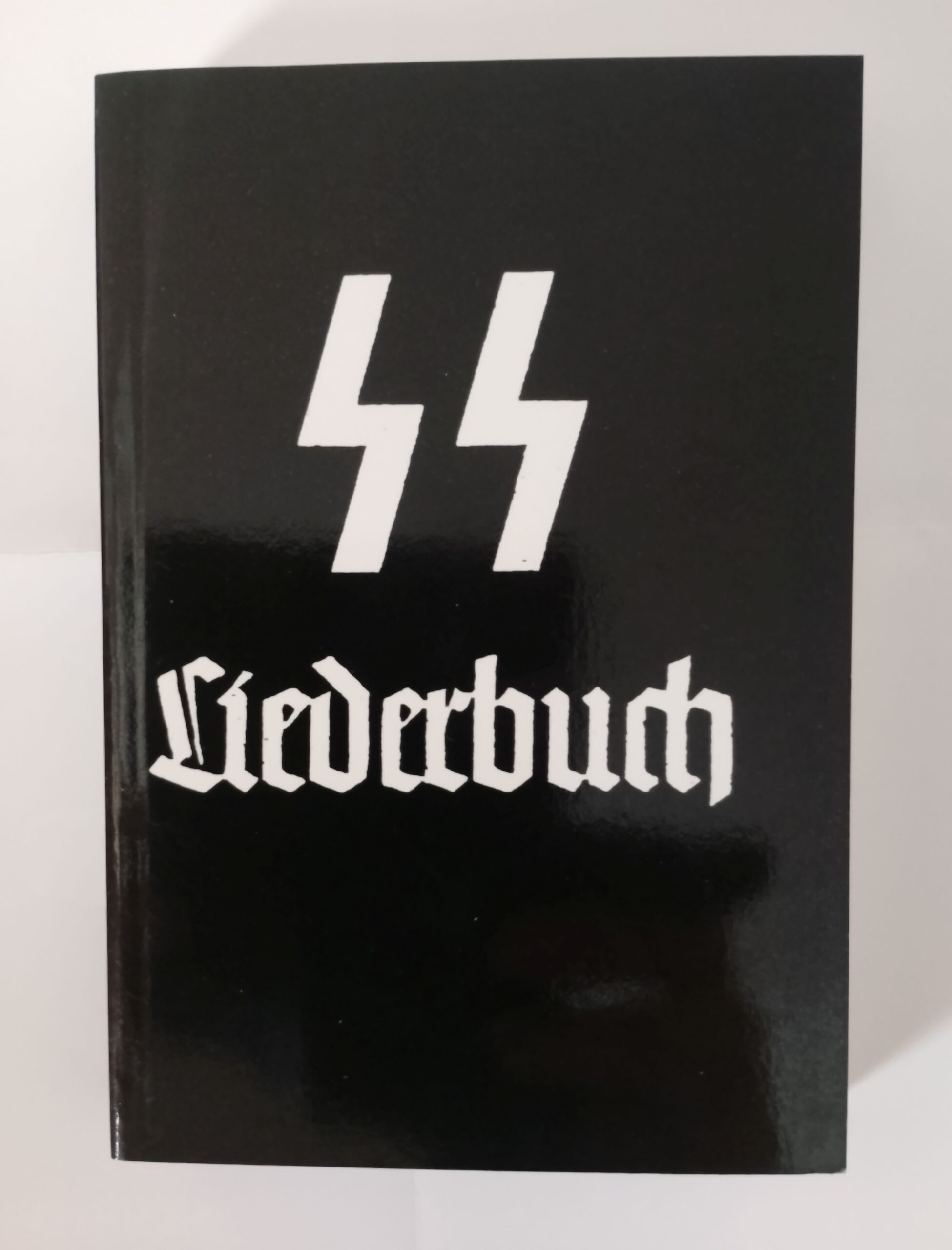
SS Illustrated Liederbuch (Songbook)
£14.99
Description
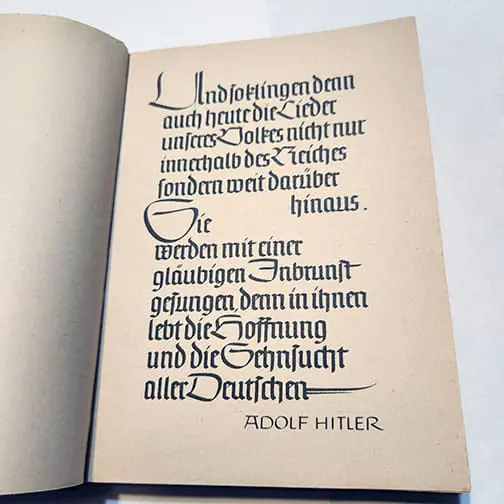
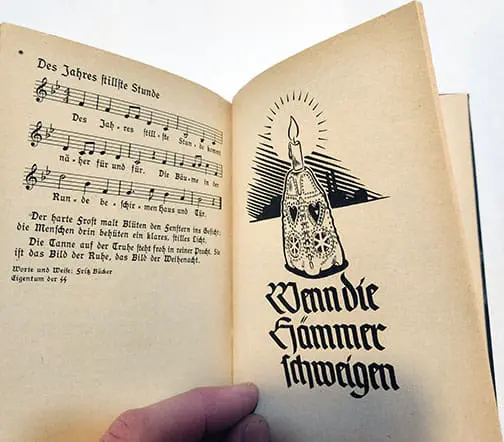
This modern reproduction of the official SS Liederbuch contains roughly 260 pages of songs of the SS, included are typical national socialist songs, marching songs, anti British and Russian songs, as well as Julfest songs. These were published by the SS leadership and are quite rare in the market place. Another prime example of the level of the SS soldier as a key figure in the 3rd Reich and a member of an elite organization.
The “SS-Liederbuch” (“SS Songbook”) was a propaganda songbook used by the SS (Schutzstaffel) in National Socialist Germany. It was published during the 1930s–early 1940s by the central publishing house of the Nazi Party, the Zentralverlag der NSDAP (Franz Eher Verlag in Munich), often in cooperation with SS offices such as the SS Race and Settlement Main Office (RuSHA).
What it was
It was essentially a standardised musical and ideological handbook for SS members, combining:
- Marching songs
- Political propaganda songs
- Traditional German folk songs repurposed for Nazi ideology
- SS-specific ceremonial and organisational songs
Many editions also included sheet music, illustrations, and ideological imagery (such as SS symbolism and portraits of Nazi leadership).
Content and purpose
The songbook typically included:
- Well-known nationalist songs (including heavily politicised versions of older material)
- National Socialist -era compositions such as “Die Fahne hoch” (Horst-Wessel-Lied)
- Military marches and wartime songs
- Songs used for SS ceremonies, training, and group cohesion
The goal wasn’t just entertainment — it was indoctrination and unity-building, using music to reinforce loyalty, identity, and ideological commitment within the SS.
Publishing context
- Issued by the Zentralverlag der NSDAP, the Nazi Party’s central publishing house
- Distributed through SS administrative structures
- Often associated with the SS Main Office for Race and Settlement (RuSHA), reflecting how tightly culture and ideology were linked in SS organisation
Why it matters historically
Today, historians treat items like the SS-Liederbuch as:
- Primary sources of Nazi propaganda culture
- Evidence of how the party used everyday media (like music books) for ideological training
- Examples of how the SS cultivated a distinct internal identity through ritual, song, and symbolism
It’s also commonly held in museum collections and archives (such as the Imperial War Museums) specifically for historical study and documentation of Nazi propaganda systems.
Heavy gloss laminate card cover.
Originals, if you can find them, sell for around £250 !
Related products
-
SALE


The Final Archives of the Führerbunker: Berlin in 1945, the Chancellery and the last days of Hitler
Original price was: £24.99.£14.99Current price is: £14.99.

